Wedding ceremony programs are one of those details that feel small until you start putting one together. What should you include? How formal should it sound? Do you need one at all? If you’re feeling unsure, you’re not alone.
Ceremony programs are meant to guide your guests and add a thoughtful, personal touch to your wedding, but they don’t need to be complicated. This guide will walk you through what to include, how to approach wording, and a few simple examples to help you get started.
What Is a Ceremony Program?
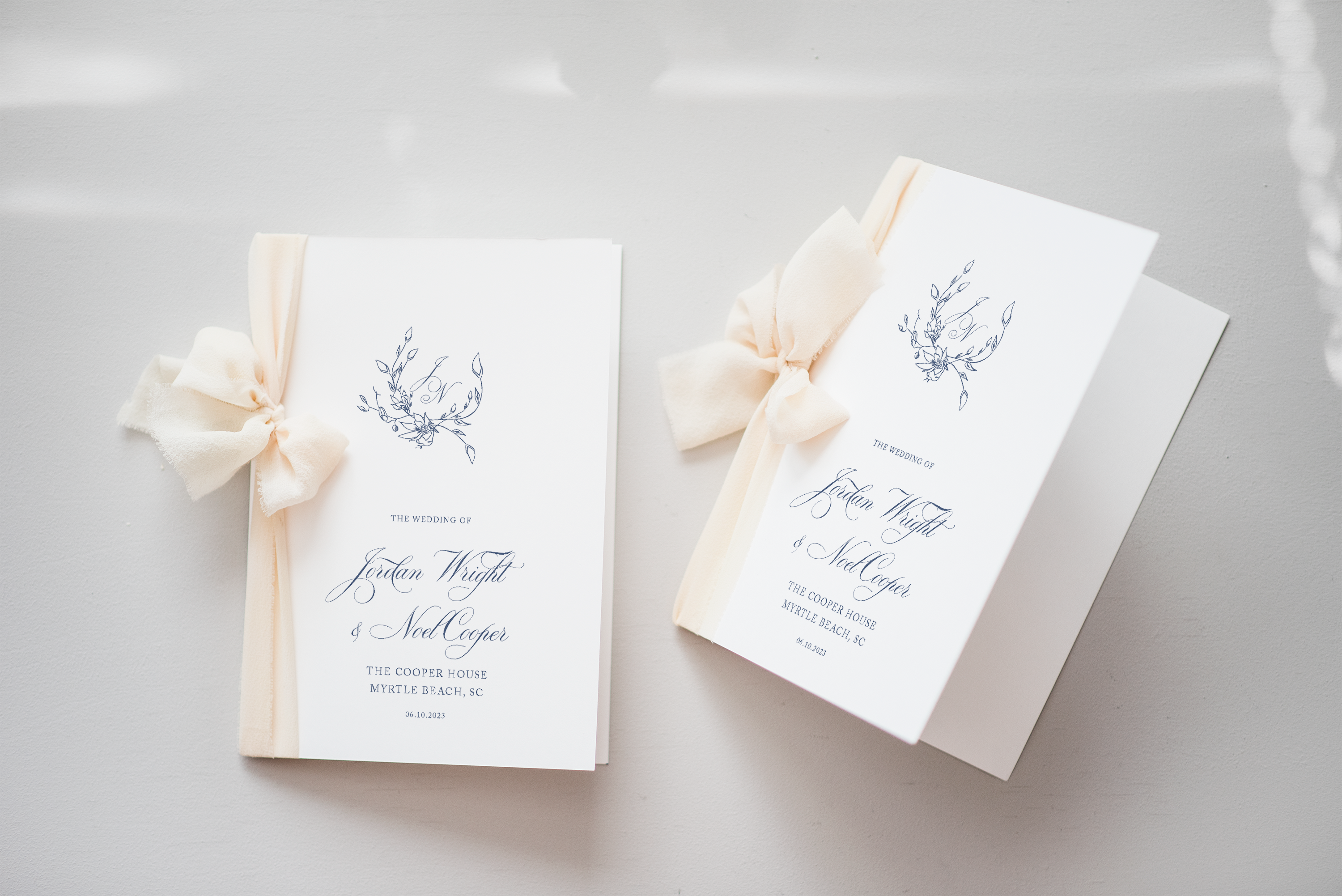
A ceremony program is a printed piece that outlines the flow of your ceremony.
It helps guests:
- Follow along
- Understand the order of events
- Feel more connected to the moment
Programs are especially helpful for:
- Religious ceremonies
- Cultural traditions
- Longer or more structured ceremonies
Even for simpler ceremonies, they can add a polished and intentional detail.
What to Include in Your Ceremony Program
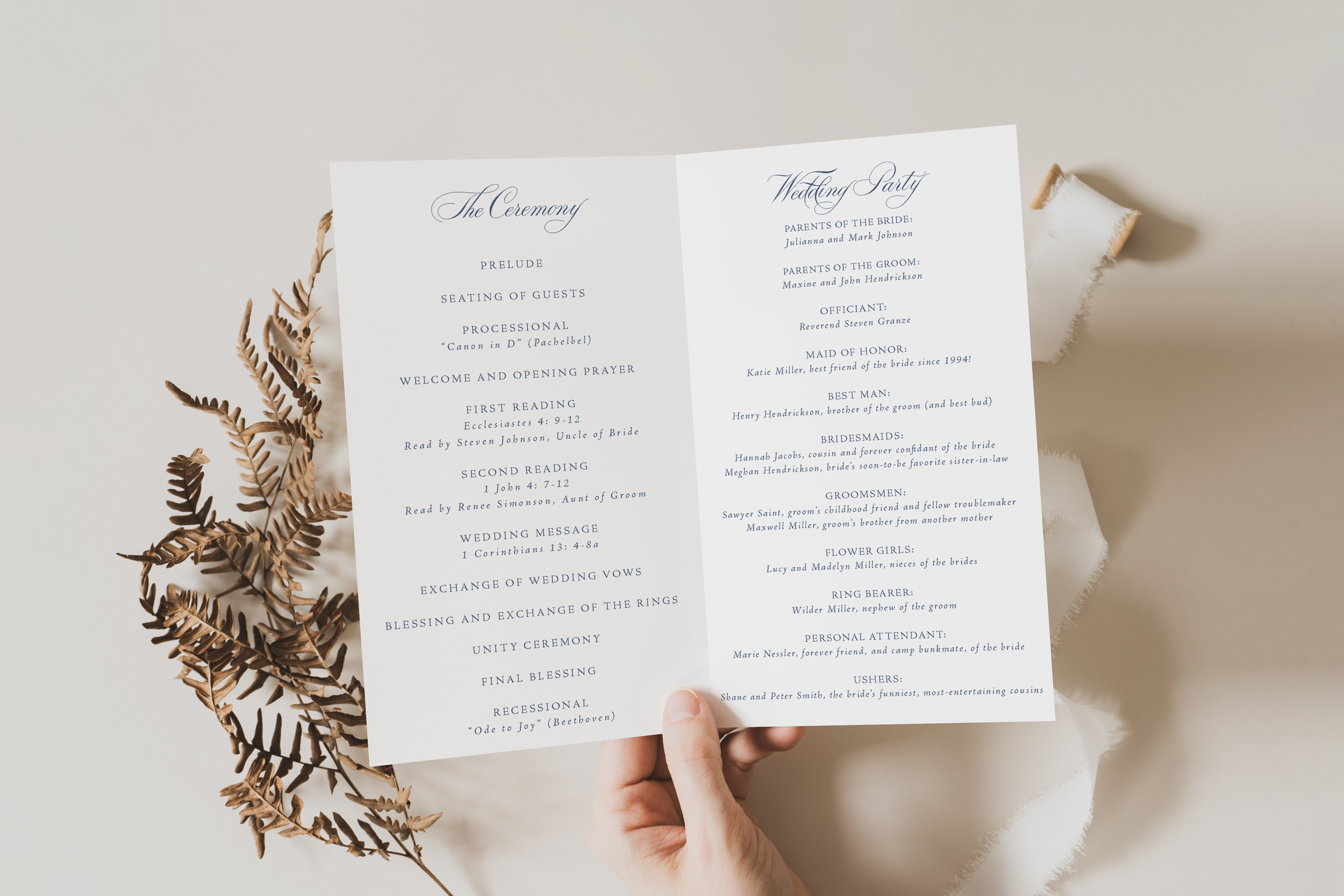
Not every program needs to include everything — but most include some combination of the following:
1. The Couple’s Names and Wedding Date
This is typically placed at the top or front of the program.
Example:
Emily Carter & James Bennett
Saturday, the Twelfth of October
Two Thousand Twenty-Five
2. The Ceremony Location
This may be included with the date or listed separately.
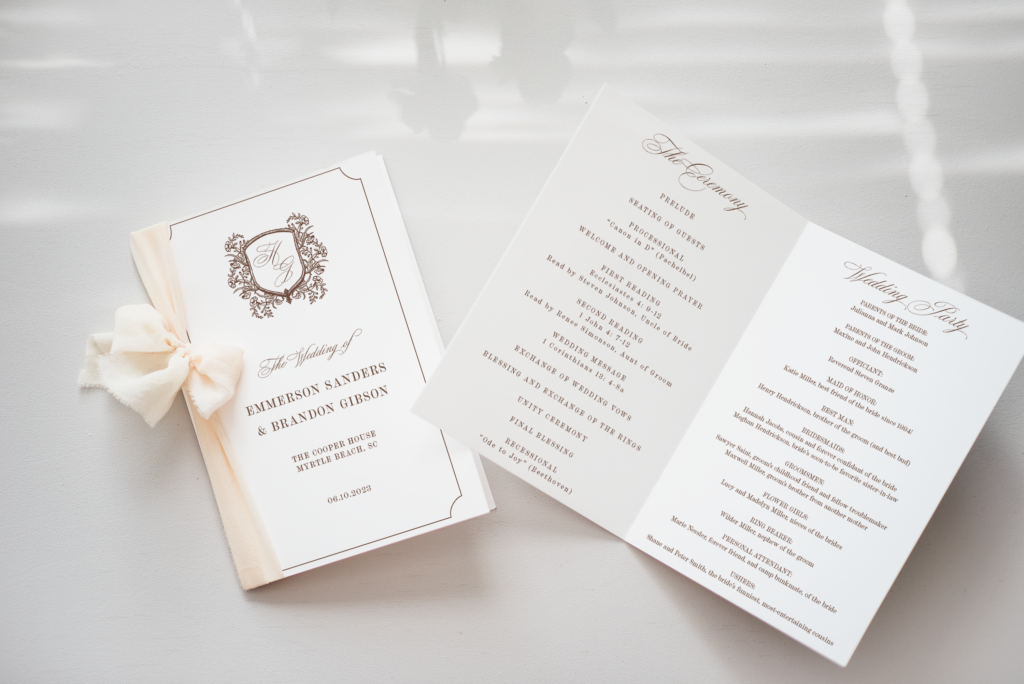
3. The Order of Ceremony
This is the main purpose of your program.
It might include:
- Prelude
- Processional
- Welcome
- Readings
- Exchange of Vows
- Exchange of Rings
- Pronouncement
- Recessional
The exact structure will depend on your ceremony style.
4. Wedding Party (Optional)
Many couples choose to include their wedding party.
This might include:
- Parents
- Officiant
- Maid/Matron of Honor
- Best Man
- Bridesmaids and Groomsmen
This section can be formal or simplified depending on your preference.
5. Readings or Songs (Optional)
If your ceremony includes meaningful readings or music, you may want to list:
- Title of the reading
- Name of the reader
- Song titles
6. A Personal Note (Optional)
Some couples include a short message to their guests.
Example:
“Thank you for being here and sharing in this special day with us.”
This adds a warm, personal touch.
Choosing the Right Tone
Your wording should reflect the overall feel of your wedding.
More Formal Wording
- Full names
- Traditional phrasing
- Structured layout
More Relaxed Wording
- Simplified wording
- Slightly more conversational tone
- Minimal structure
👉 There’s no right or wrong — just what feels aligned with your ceremony.
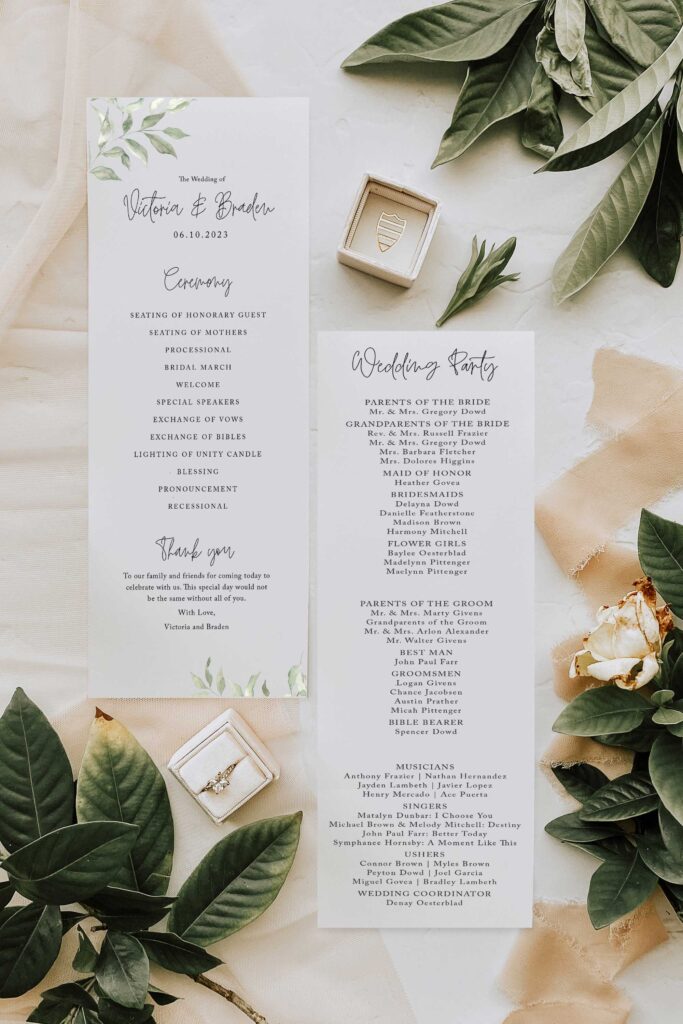
Simple Ceremony Program Example
Here’s a clean, timeless example:
Emily Carter & James Bennett
Saturday, October 12, 2025
St. Andrew’s Chapel
Order of Ceremony
Prelude
Processional
Welcome
Reading
Exchange of Vows
Exchange of Rings
Pronouncement
Recessional
Thank you for being here with us today.
Common Mistakes to Avoid
Including Too Much Information
It’s easy to feel like you need to include everything.
But overly detailed programs can feel crowded and harder to follow.
👉 Focus on clarity over quantity
Overcomplicating the Layout
Programs should be easy to read at a glance.
Clean spacing and simple structure are key.
Forgetting to Proofread
Just like invitations, programs should be reviewed carefully.
Check:
- Names
- Order of events
- Spelling
- Titles
Do You Need Ceremony Programs?
Not every wedding requires them.
You may not need programs if:
- Your ceremony is very short
- The structure is simple
- Guests can easily follow along
However, many couples still choose to include them because they:
- Add a thoughtful detail
- Enhance the guest experience
- Tie into the overall stationery design
Coordinating with Your Invitation Suite
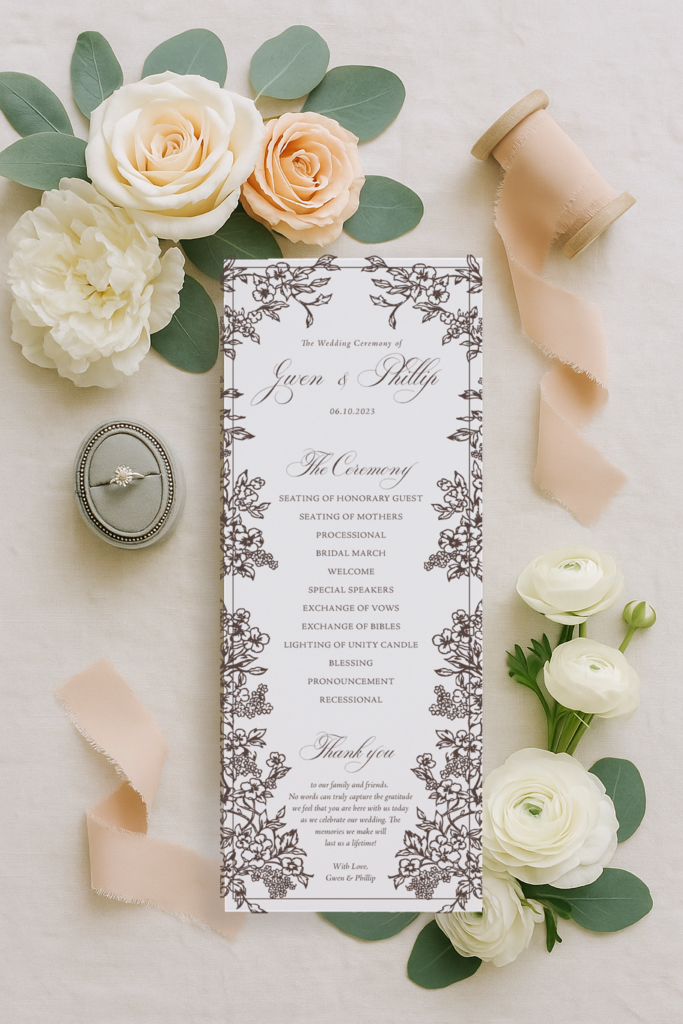
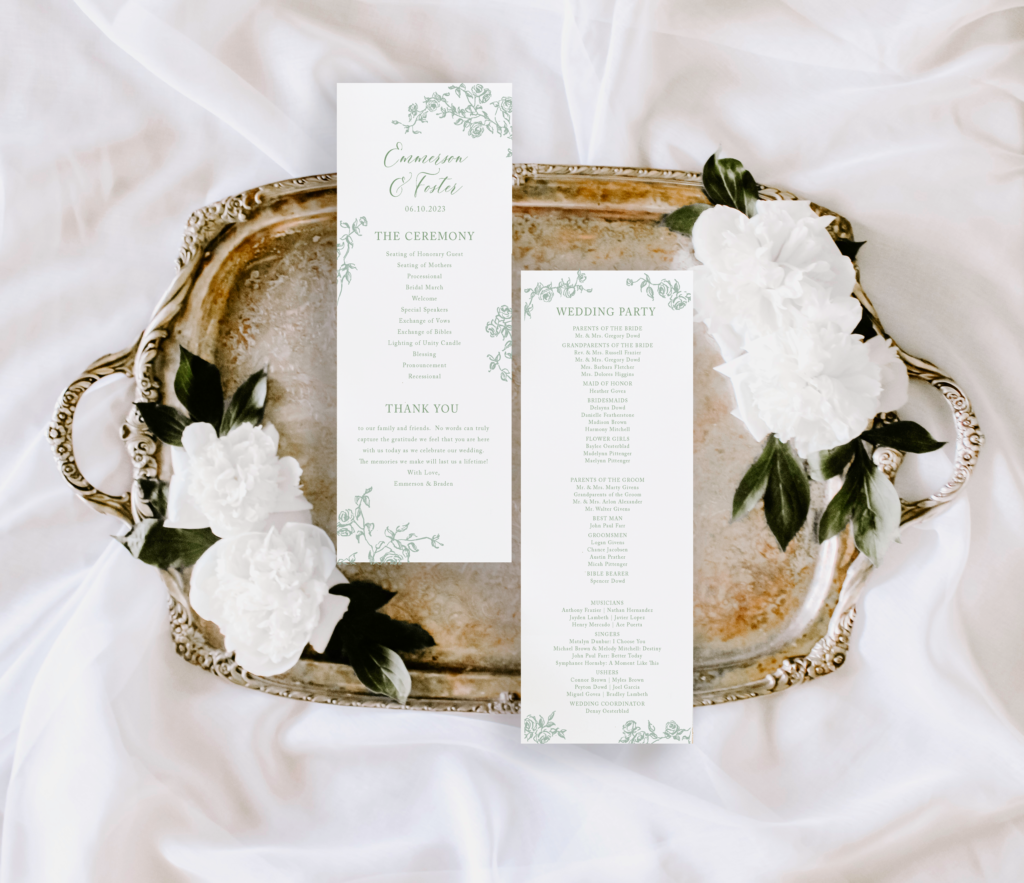
Ceremony programs are part of your larger stationery story.
When they coordinate with your invitations:
- The design feels cohesive
- The wedding feels more polished
- Everything flows naturally from start to finish
This doesn’t mean they need to match exactly — just that they feel connected.
Final Thoughts
Ceremony programs don’t need to be complicated to be meaningful.
A simple, well-designed program with clear wording can:
- Guide your guests
- Enhance your ceremony
- Add a thoughtful finishing touch
And like all of your wedding stationery, the goal is not perfection, but intention.

Leave a Reply