Getting engaged is one of life’s sweetest milestones, and once the excitement settles, the questions begin.
Where do we start?
What do we need?
And when do we need it?
One of the most common areas couples feel confused about early on is wedding paper. From save the dates to invitations to day-of details, wedding stationery plays a much bigger role than many people realize and timing can vary considerably depending on your choices.
If you’re newly engaged and wondering how to approach wedding paper without feeling overwhelmed, this guide will walk you through it step by step — clearly, calmly, and with intention.
What Is “Wedding Paper,” Anyway?
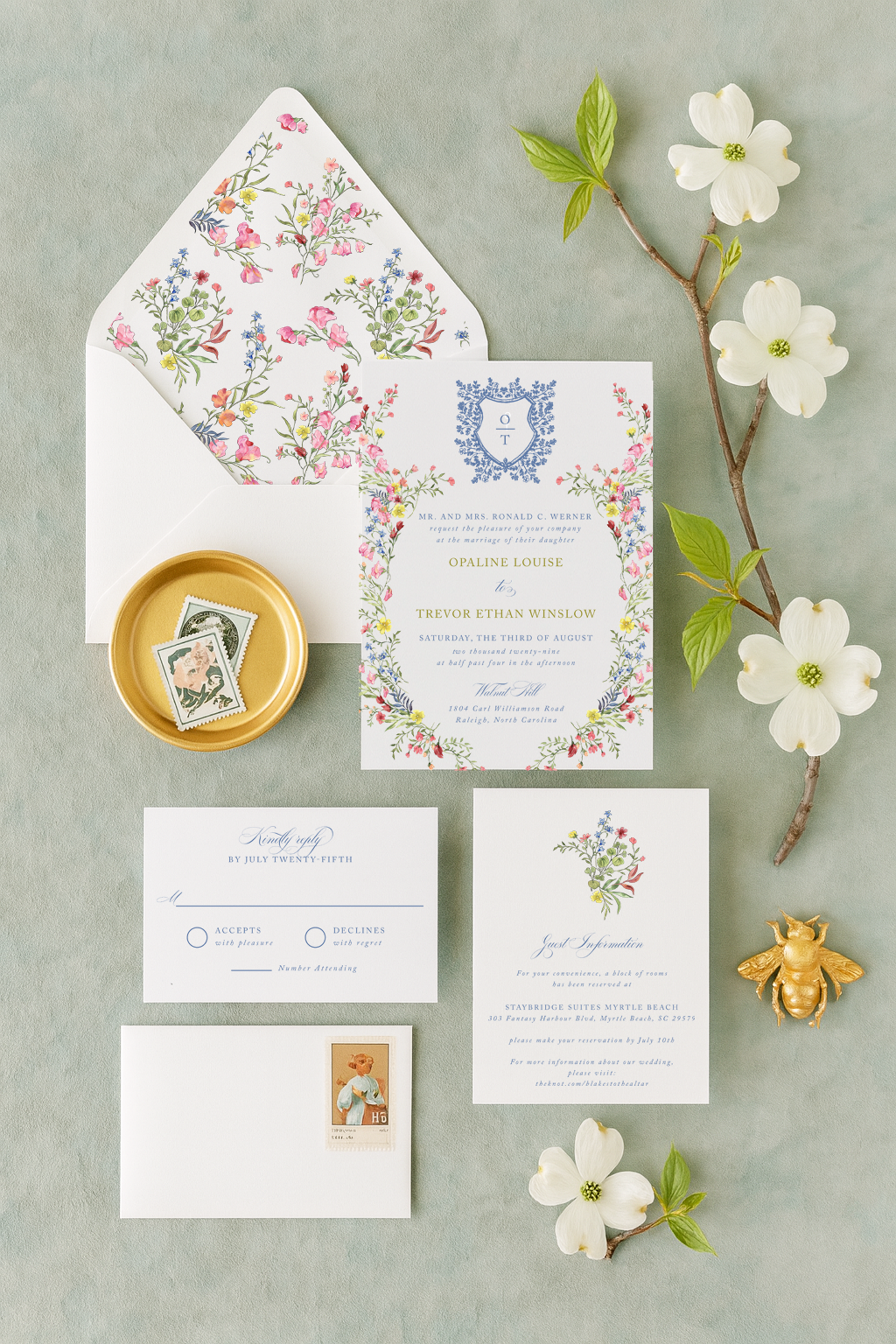
Wedding paper includes all of the printed (and digital) pieces that communicate information, set the tone, and guide your guests through your celebration.
This typically includes:
- Save the Dates
- Wedding Invitations
- RSVP cards (or digital RSVPs)
- Details cards (travel, accommodations, registry, etc.)
- Ceremony programs
- Menus
- Place cards or escort cards
- Table numbers or seating charts
- Thank you cards
Not every wedding needs every item, and that’s important to remember. Your wedding paper should support your celebration, not complicate it.
Step 1: Start With the Big Picture
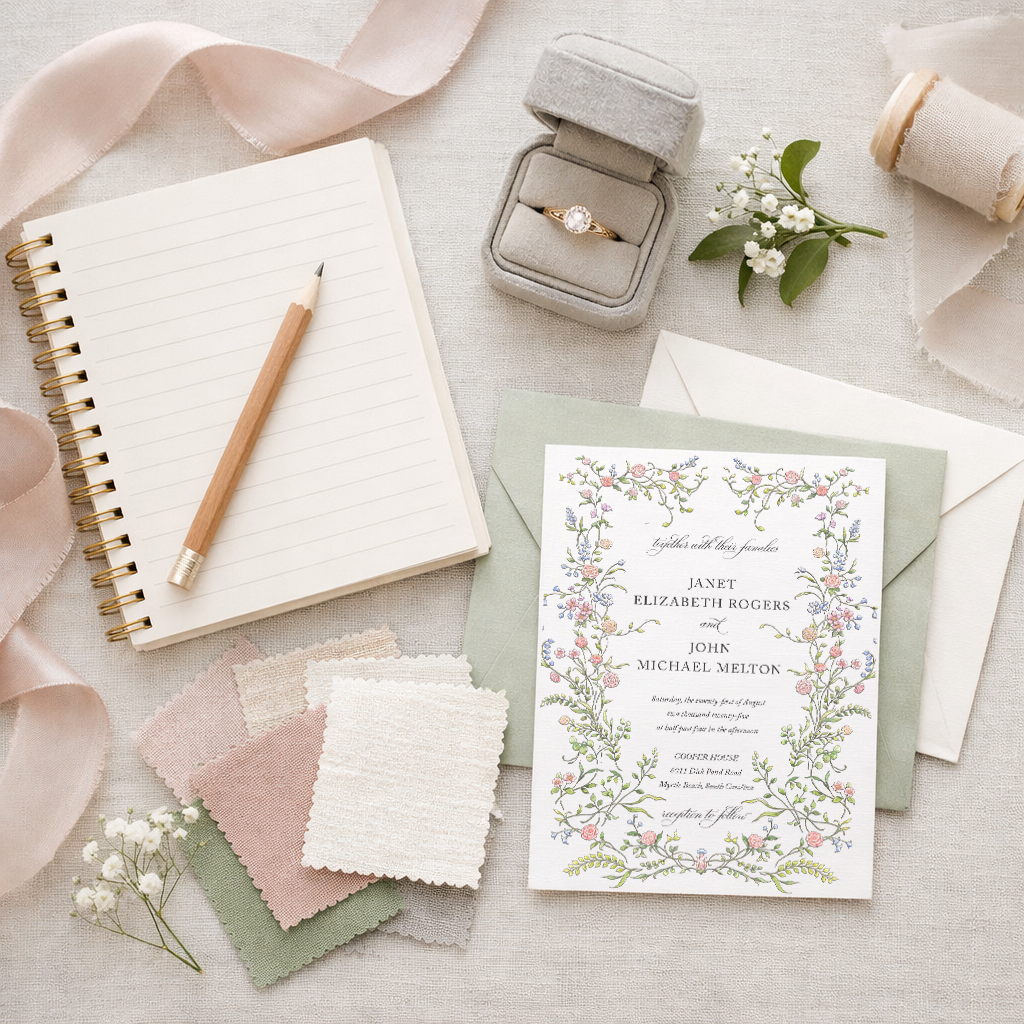
Before choosing any designs, take a moment to think about your overall vision:
- Wedding date & season
- Venue style (formal, outdoor, historic, modern, backyard, etc.)
- Guest count (large or intimate?)
- Overall feel (classic, romantic, relaxed, elegant, playful)
Your stationery should feel like a natural extension of these decisions — not a separate, stressful task.
📌 Tip from the industry:
Your invitations are often the first impression your guests will have of your wedding. They quietly communicate the level of formality, the tone, and even what guests should expect to wear.
Step 2: Understand the Wedding Paper Timeline
Timing is one of the biggest sources of stress for couples, so let’s simplify it.
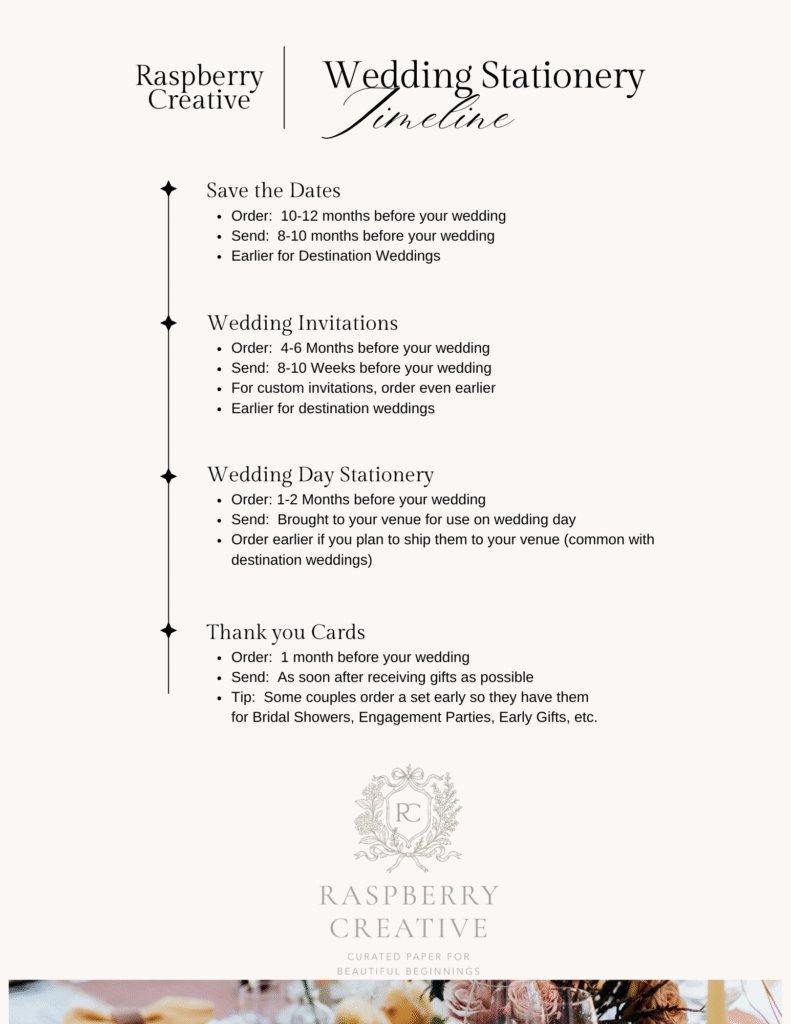
Save the Dates
- Sent 6–9 months before the wedding
- Earlier (8–12 months) for destination weddings
- Purpose: let guests mark their calendars
Wedding Invitations
- Sent 6–8 weeks before the wedding
- Earlier for destination or holiday weddings
- Include RSVP deadline (typically 3–4 weeks before the wedding)
Day-of Paper
- Designed once RSVPs are finalized
- Includes programs, menus, escort cards, signage
Thank You Cards
- Sent after the wedding (ideally within 3 months)
📌 Tip:
Planning paper early doesn’t mean ordering everything at once — it simply means knowing what’s coming.
Step 3: Decide What Matters Most to You
There’s no rule that says you must have every paper item. Many couples today choose to prioritize:
- A beautiful invitation suite
- Simplified RSVPs
- Thoughtful day-of details
Ask yourselves:
- What do we care most about?
- What fits our budget and guest experience?
- What will guests actually use?
📌 Industry insight:
Couples who feel happiest about their stationery usually focus on quality over quantity.
Step 4: Choose a Design Direction
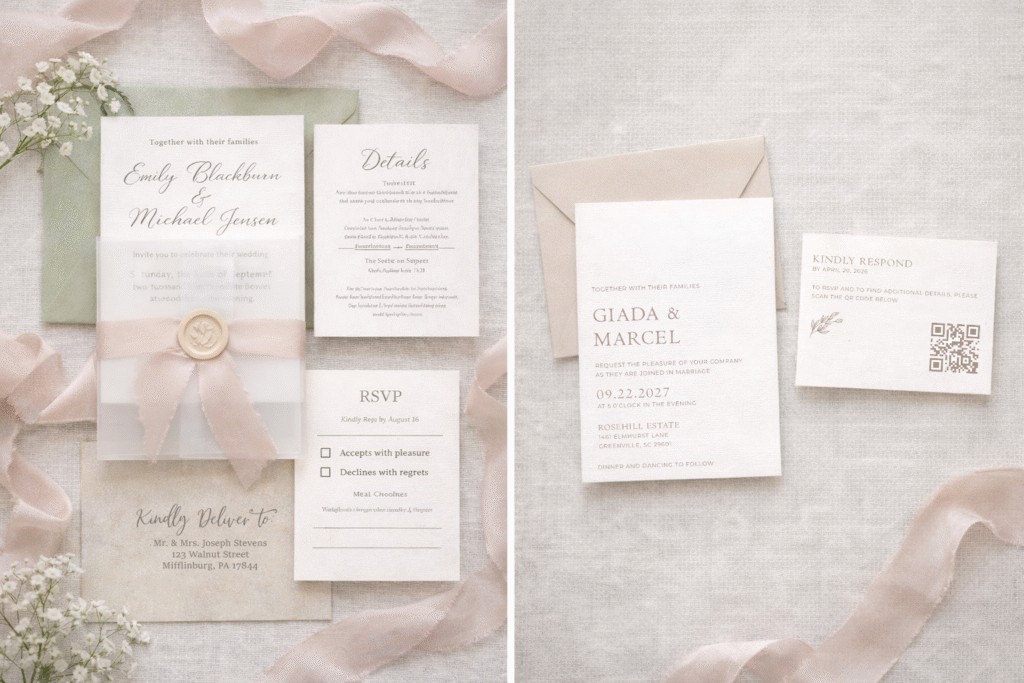
Before selecting a specific design, consider:
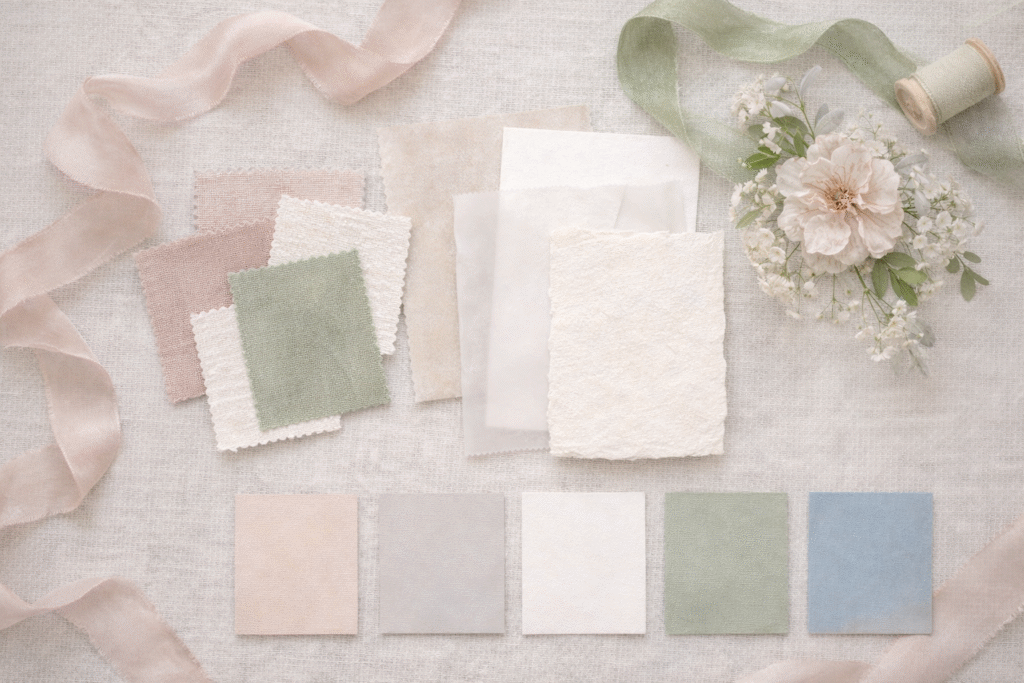
- Color palette
- Floral vs. typography-forward styles
- Traditional vs. modern layouts
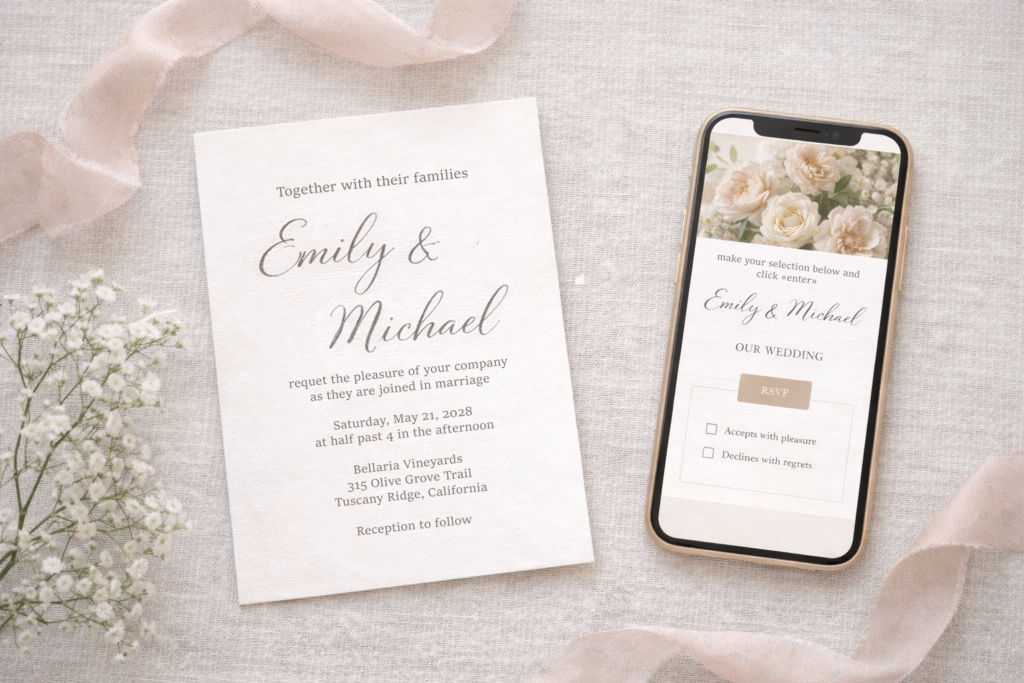
- Printed vs. digital options
Many couples find it helpful to create a small mood board before choosing stationery — especially if they’re still finalizing colors or décor.
📌 Helpful note:
Your stationery doesn’t have to match everything exactly. It should coordinate — not compete.
Step 5: Printed vs. Digital — or Both
There’s no one-size-fits-all answer here.
Printed paper offers:
- A tactile, timeless feel
- A keepsake-quality experience
- Strong first impressions
Digital elements can:
- Simplify RSVPs
- Reduce printing costs
- Offer flexibility for updates
While we do not recommend going 100% digital with your wedding invitations, we love a hybrid approach for modern couples. Many couples choose a hybrid approach: printed invitations paired with digital RSVPs or a wedding website.
Step 6: Work With a Stationer (or Choose a Trusted Collection)
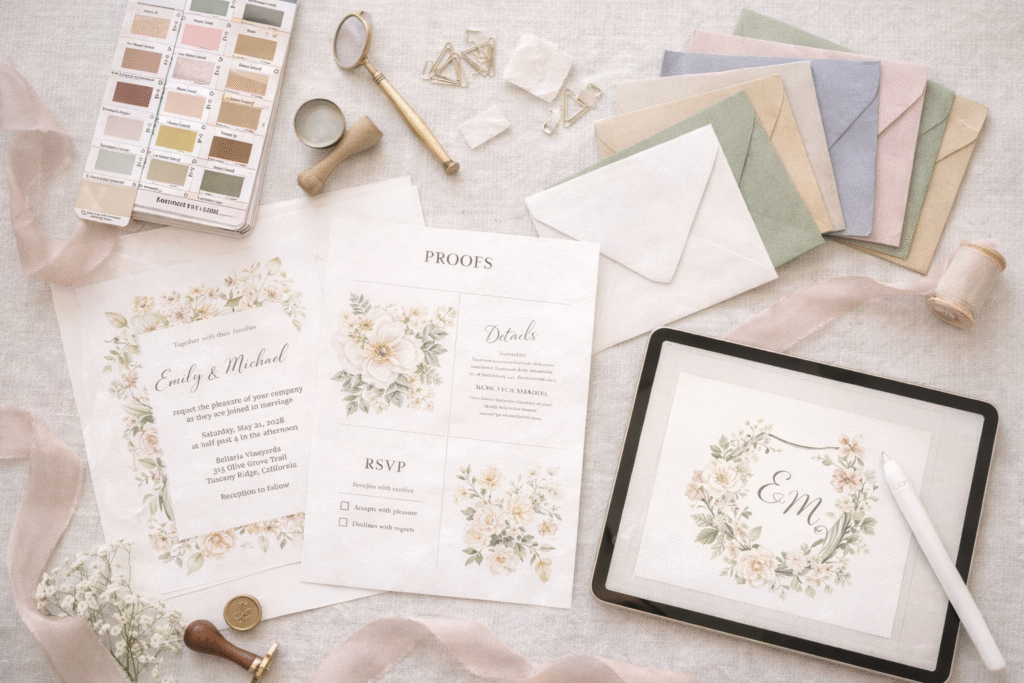
Whether you’re ordering a semi-custom suite, editable templates, or a fully custom design, your stationer should:
- Help guide timing
- Offer clear instructions
- Provide thoughtful design advice
- Make the process feel manageable
📌 From experience:
Couples who feel supported through stationery decisions enjoy the planning process far more — and avoid costly last-minute stress.
Final Thoughts
If you’re newly engaged, wedding paper doesn’t need to be overwhelming. With a clear timeline, thoughtful choices, and a focus on what truly matters to you, your stationery can become one of the most meaningful, and enjoyable, parts of planning.
Think of wedding paper as a quiet storyteller, setting the tone, welcoming your guests, and guiding them through one of the most special days of your life.

Leave a Reply