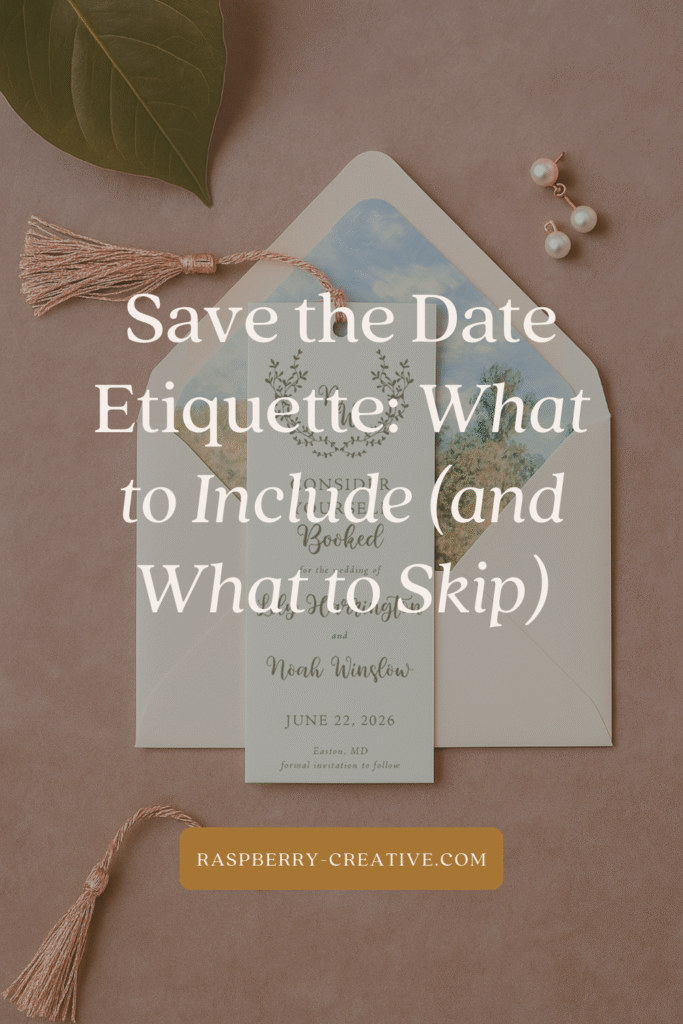
Save the dates are often the very first piece of wedding stationery couples send, and because of that, they play a special role. They’re not meant to share all the details, but rather to give guests an early heads-up so they can plan ahead.
That simplicity is intentional.
As a wedding stationer, one of the most common questions I hear is:
“What should we include on our save the dates?”
Closely followed by:
“What shouldn’t we include?”
We’ve also been seeing more and more of the blurring of the lines between save the dates and wedding invitations in recent years, and they are not, nor are they intended to be, interchangeable. If you’re planning your wedding and want to do things thoughtfully (without overthinking every detail), this guide will walk you through save the date etiquette — what to include, what to skip, and why it matters.
What a Save the Date Is (and Isn’t)
A save the date serves one primary purpose:
✨ to reserve time on your guests’ calendars
It is not an invitation.
It does not require a response.
And it doesn’t need to answer every question your guests might have.
When save the dates stay simple, they do their job beautifully — and make the invitation that follows feel intentional and complete.
What to Include on a Save the Date
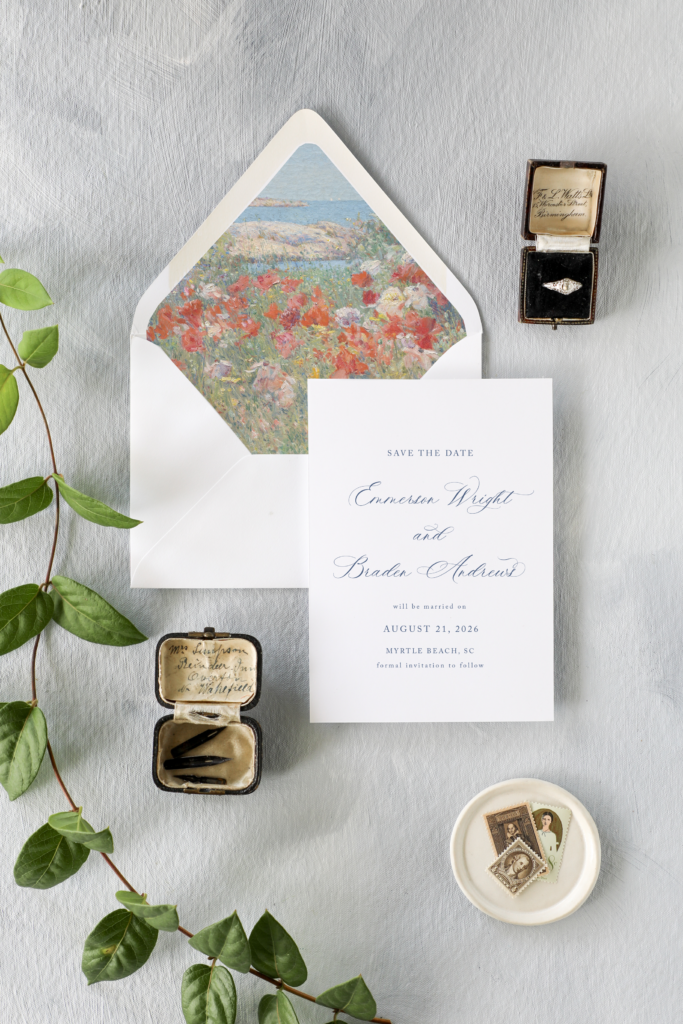
1. Your Names
This may seem obvious, but clarity matters, especially if you’re inviting extended family, colleagues, or friends from different seasons of your life.
Use:
- First names (for a relaxed feel), or
- Full names (for a more formal tone)
Let your wording reflect the overall feel of your wedding.
2. The Wedding Date
This is the heart of the save the date.
Include:
- Month, day, and year
You do not need to include the day of the week unless it’s on a non-traditional day like a Thursday. Avoid vague language; guests rely on this piece to plan travel, request time off, and coordinate schedules.
3. The Wedding Location (City & State Only)
At the save the date stage, guests only need a general sense of where your wedding will take place.
Include:
- City and state
- Country, if it’s a destination wedding
You do not need:
- Venue name
- Address
- Ceremony start time
Those details belong on the invitation.
4. A Simple “Invitation to Follow”
This small line does important work. It gently tells guests:
- This is not the full invitation
- More details are coming later
Phrases like:
- Formal invitation to follow
- Invitation to follow
help set expectations and prevent confusion.
Remember: This should also serve as a reminder that your save the date is meant ONLY for those who will receive a formal invitation.
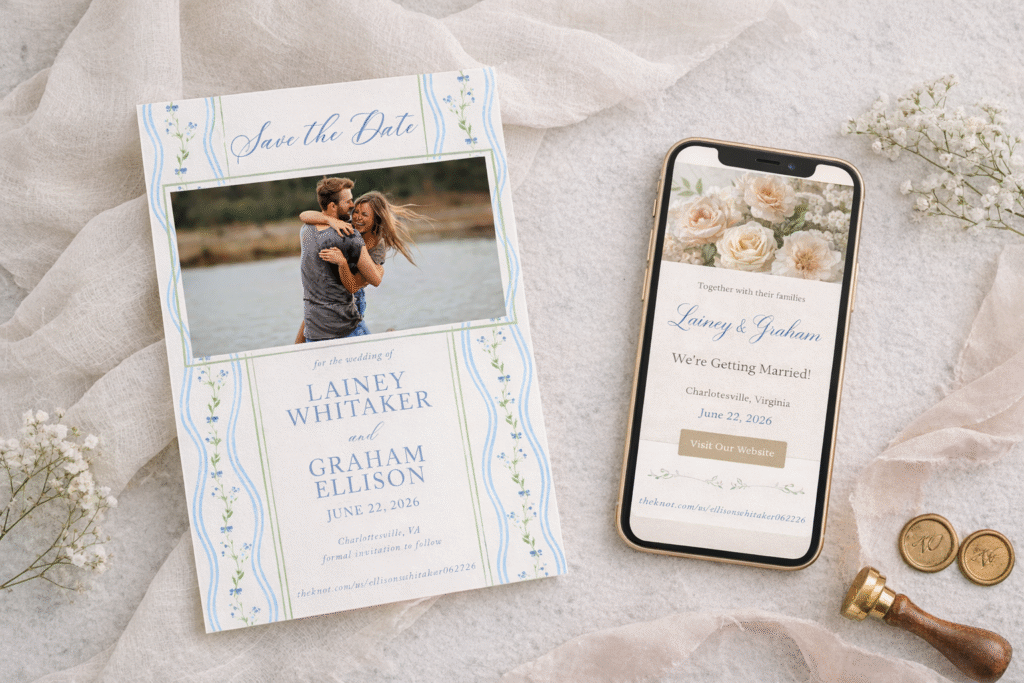
5. Your Wedding Website (Optional but Helpful)
If you’ve already created a wedding website, including the URL is perfectly acceptable, especially for destination weddings or large guest lists.
That said, keep the website simple at this stage:
- Welcome message
- Travel planning info
- General details
Avoid asking guests to RSVP yet.
What to Skip on a Save the Date
This is where etiquette matters most, and where couples often feel unsure.
1. RSVP Information
This is the most important rule of save the date etiquette:
RSVPs should never be included on save the dates.
Why?
- Guests don’t yet have full details
- Plans may change months in advance
- It creates confusion and unnecessary pressure
- It leads to inaccurate guest counts
RSVPs belong only with the invitation; when guests have all the information they need to respond thoughtfully.
💛 A gentle reminder:
Skipping RSVP details on save the dates isn’t old-fashioned; it’s considerate.
2. Ceremony Start Time
Even if you think your timeline is finalized, it’s best to wait.
Ceremony times can shift, and guests don’t need this information yet.
3. Registry Information
Save the dates should never reference gifts or registries.
That information belongs on:
- Your wedding website (once invitations are sent), or
- Shared through word of mouth
4. Too Many Extra Details
Travel blocks, attire guidance, weekend schedules; all of that comes later.
Save the dates should feel:
- Clean
- Calm
- Uncluttered
Less information = more elegance.
When to Send Save the Dates
General timing guidelines:
- 8-12 months before the wedding
- 12+ months before for destination weddings or holiday weekends
Sending them earlier gives guests time to plan, without overwhelming them.
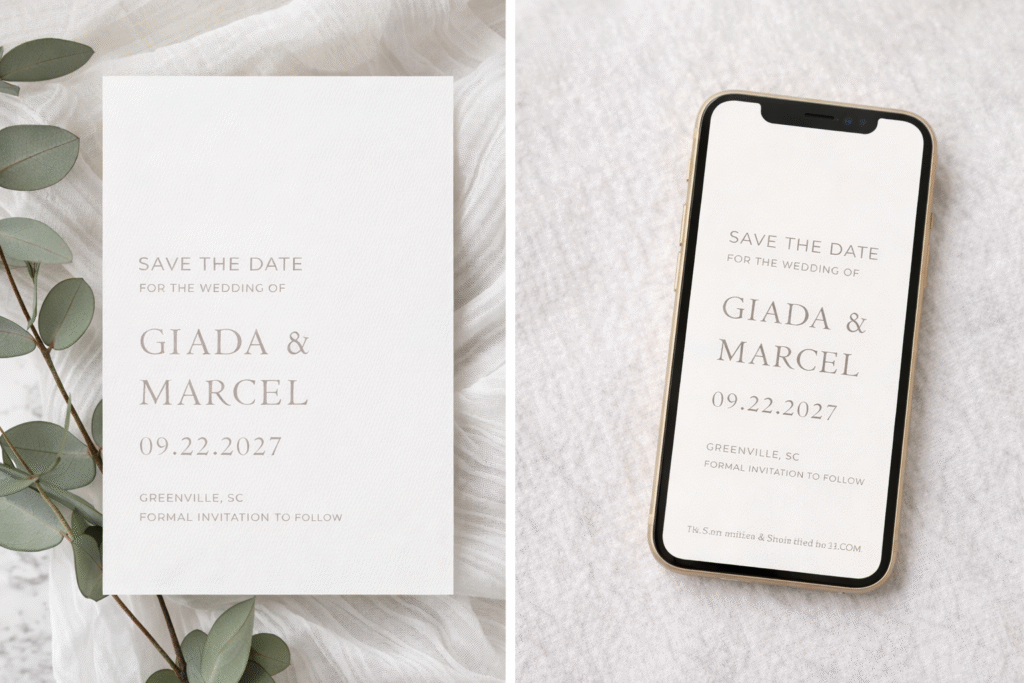
Digital vs. Printed Save the Dates
Both options are perfectly acceptable.
Printed save the dates offer:
- A tangible keepsake
- A sense of occasion
- A beautiful introduction to your wedding style
Digital save the dates can:
- Be budget-friendly
- Deliver information quickly
- Work well for casual or smaller weddings
The key is clarity and thoughtfulness, not the format itself.
Final Thoughts
Save the dates don’t need to do everything, they simply need to do their one job well.
When you keep them simple, clear, and etiquette-friendly, you set the tone for a smooth planning experience and a beautifully coordinated stationery suite to follow.
If you’re unsure what to include or want guidance choosing a design that fits your style, I always encourage couples to ask. Thoughtful stationery isn’t about rules; it’s about making your guests feel informed and welcomed from the very beginning.

Leave a Reply