When it comes to wedding day stationery, few details cause more confusion than seating. Place cards, escort cards, seating charts… Do you need all three? Just one? What’s the difference? If you’ve found yourself asking these questions, you’re not alone.
This guide will walk you through each option so you can choose what works best for your wedding, and create a guest experience that feels seamless and thoughtful.
Why Seating Details Matter
Beyond aesthetics, seating stationery serves an important purpose.
It helps guests:
- Know where to go
- Feel welcomed and considered
- Move smoothly from one part of your wedding to the next
When done well, it eliminates confusion and creates a calm, organized experience.
What Are Escort Cards?
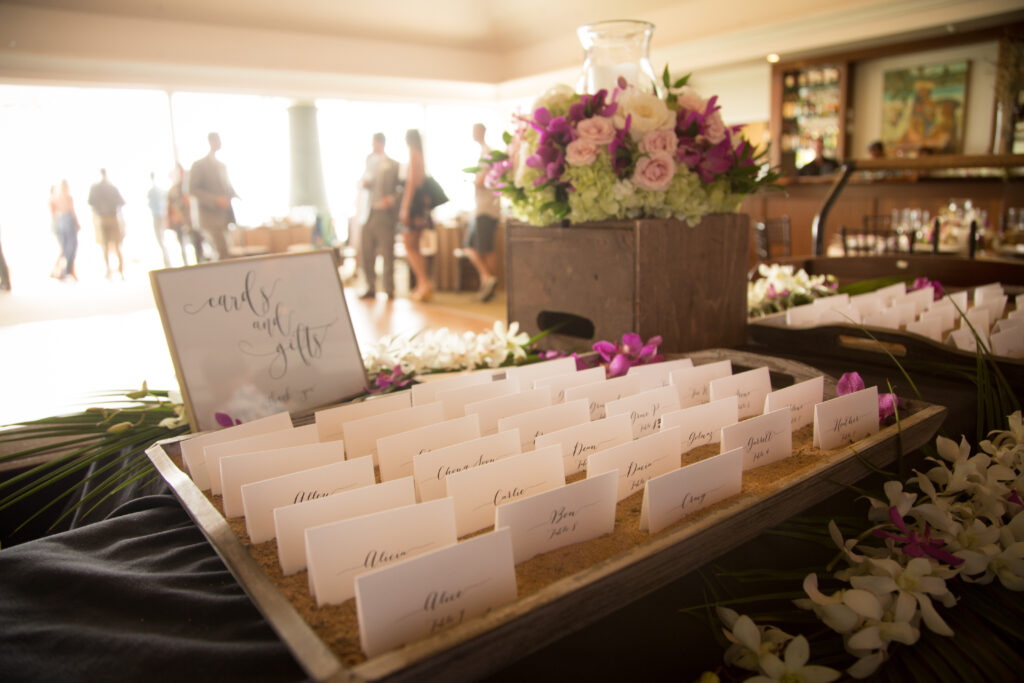
Escort cards are typically displayed at the entrance to your reception.
They tell guests:
👉 Which table they are assigned to
Each card includes:
- Guest name
- Table number
Guests pick up their card and then find their table once inside.

When to Use Escort Cards
Escort cards are ideal when:
- You’re assigning guests to tables (but not specific seats)
- You want a flexible and easy-to-organize option
- You prefer a traditional approach
They’re also a beautiful opportunity to create a styled display — something guests interact with as they enter your reception.
What Is a Seating Chart?
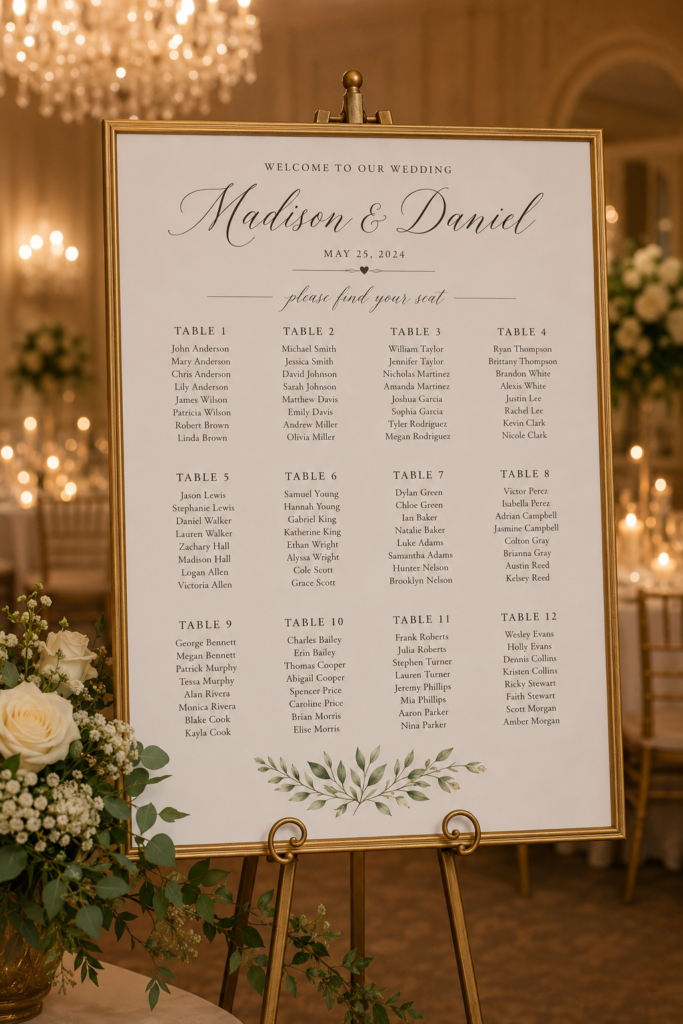
A seating chart serves the same purpose as escort cards — but in a different format.
Instead of individual cards, all guest names are displayed on a larger sign or board, organized by table.
When to Use a Seating Chart
A seating chart works well when:
- You want a more streamlined look
- You prefer a single display rather than individual cards
- Your guest list is relatively straightforward
A Quick Note
Seating charts are visually beautiful, but they don’t give guests something to physically take with them.
Because of this, they are often paired with:
- Place cards
- Or very clear table numbering
What Are Place Cards?
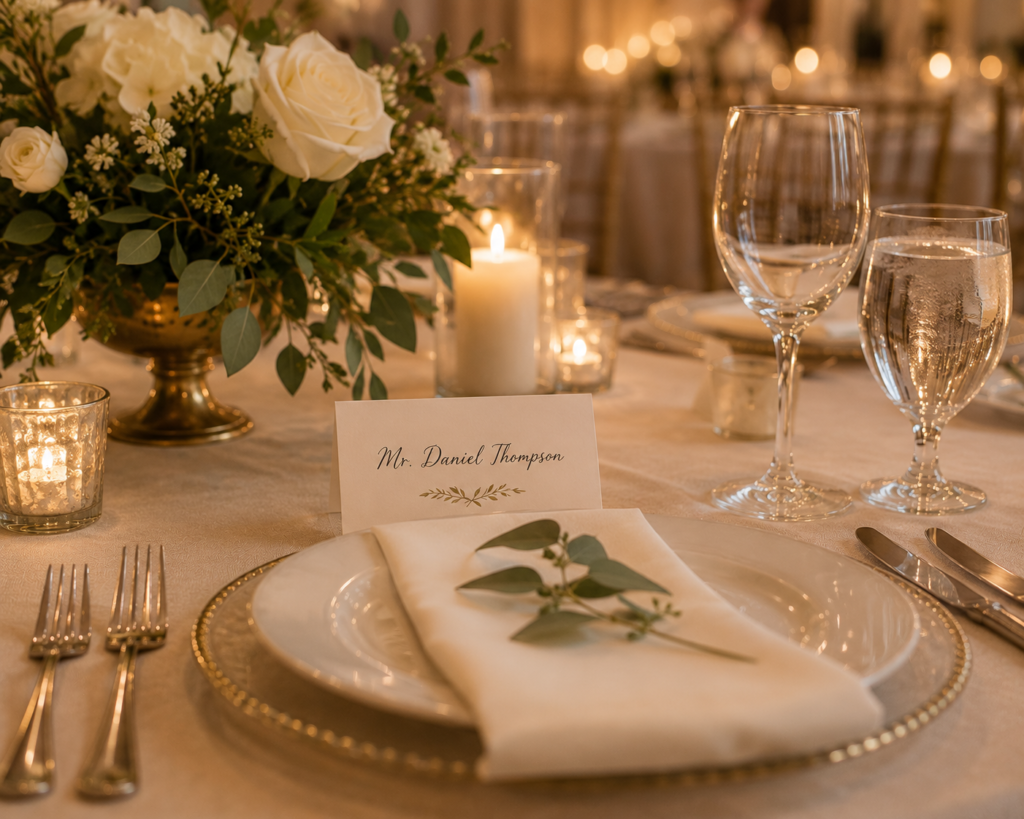
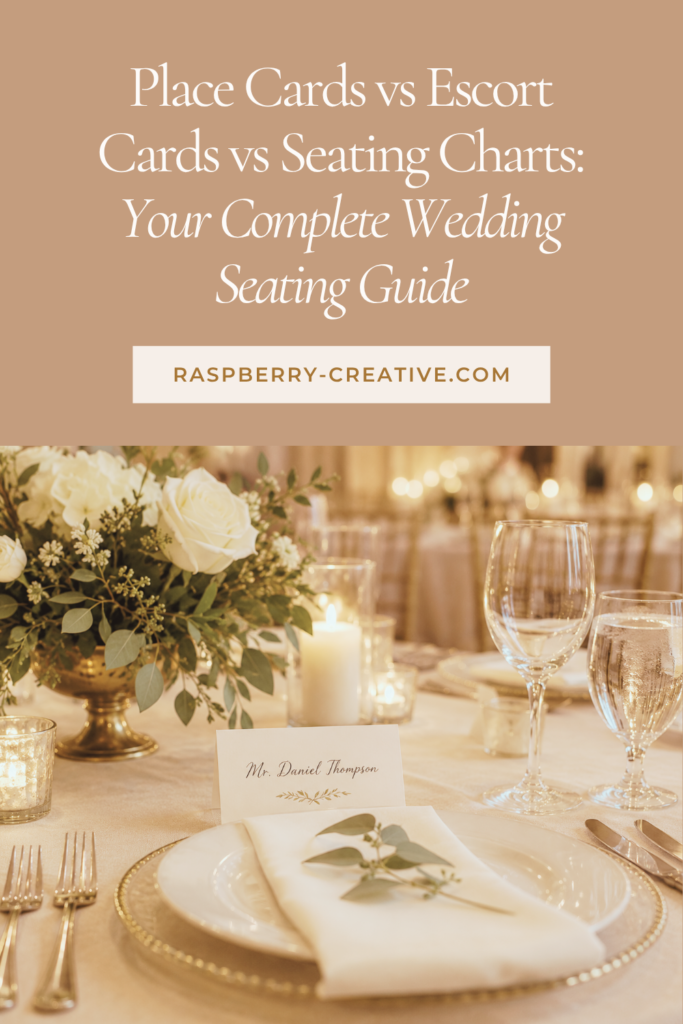
Place cards are set directly at each guest’s seat.
They tell guests:
👉 Exactly where to sit at the table
Each card typically includes:
- Guest name
When to Use Place Cards
Place cards are most useful when:
- You’re assigning specific seats
- Guests have pre-selected meals
- You’re planning a more formal reception
They add a refined, intentional feel to your table settings and ensure everything runs smoothly once guests are seated.
Do You Need All Three?
Not necessarily.
Here are the most common combinations:
Option 1: Escort Cards Only
- Guests find their table
- Sit wherever they choose
👉 Most common and flexible
Option 2: Seating Chart Only
- Guests find their name on a display
- Sit anywhere at their assigned table
👉 Clean and minimal
Option 3: Escort Cards + Place Cards
- Escort card → table assignment
- Place card → exact seat
👉 Best for formal or structured events
Option 4: Seating Chart + Place Cards
- Chart → table
- Place card → seat
👉 More detailed but very polished
Designing a Cohesive Seating Experience
Your seating stationery is part of your overall design — not just a functional detail.
When it coordinates with your invitation suite:
- Fonts feel consistent
- Colors carry through
- The entire event feels more intentional
This is where a cohesive collection makes a difference.
From your invitations to your day-of stationery, every piece works together to create a seamless look.
Common Mistakes to Avoid
Not Being Clear Enough
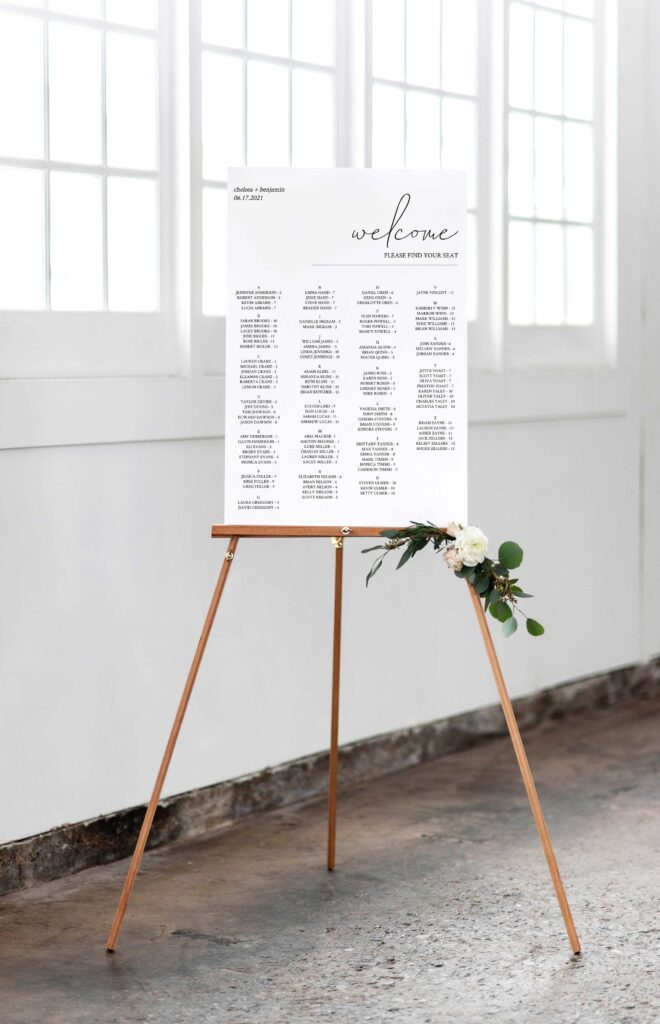
Guests should immediately understand where to go. Avoid overly creative layouts that sacrifice readability. While it has become common for seating charts to be organized by table, an easier and more efficient format for your guests is to organize names alphabetically. This takes more up-front effort on your part to organize, but will streamline the flow of guests on the wedding day and avoid large jams of people not being able to enter the reception because it takes a long time to find their name on the list. This is especially important to consider when you have a larger guest count.
Forgetting Table Numbers
Even the most beautiful setup won’t work if guests can’t easily find their table.
Last-Minute Changes Without Updates
Make sure your final seating list matches your printed materials exactly.
When to Order Seating Stationery
Timing is key.
6–8 Weeks Before the Wedding
- Order table numbers
- Order signage (welcome sign, seating chart)
3–4 Weeks Before the Wedding
- Finalize guest list
- Submit names for escort/place cards
This allows enough time for:
- Accurate information
- Production
- Delivery

Final Thoughts
Seating stationery may seem like a small detail, but it plays a big role in how your wedding day feels. When guests know exactly where to go, everything flows more smoothly.
And when these pieces are thoughtfully designed and coordinated with your invitation suite, they become more than just functional. They become part of the experience.

Leave a Reply