Wedding RSVP Card Wording: Why It Matters and How to Get It Right
When couples think about their wedding invitations, most of the focus goes to the main invitation.
But one of the most important pieces in your entire suite is often much smaller.
Your RSVP card.
It may seem simple, but the wording you choose on your RSVP card plays a major role in how smoothly your wedding planning unfolds.
From guest responses to meal selections, clear and thoughtful wording helps avoid confusion, ensures accuracy, and creates a more seamless experience for both you and your guests.
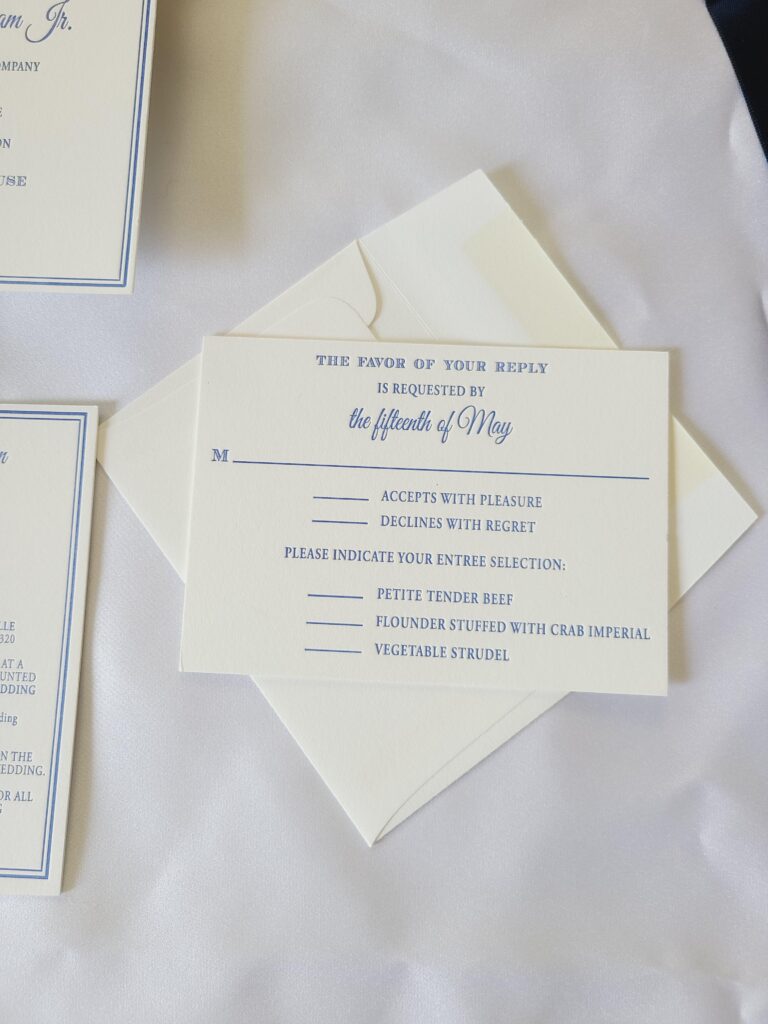
Why RSVP Wording Is So Important
Your RSVP card is where your guests:
- Confirm their attendance
- Indicate how many people are coming
- Select meal choices (if applicable)
If the wording is unclear or incomplete, it can lead to:
- Missing names
- Unclear guest counts
- Incorrect meal selections
- Extra follow-up for you
In other words, more stress during a time that should feel exciting.
What Every RSVP Card Should Include
At its core, your RSVP card should be simple and easy to follow.
Here are the key elements to include:
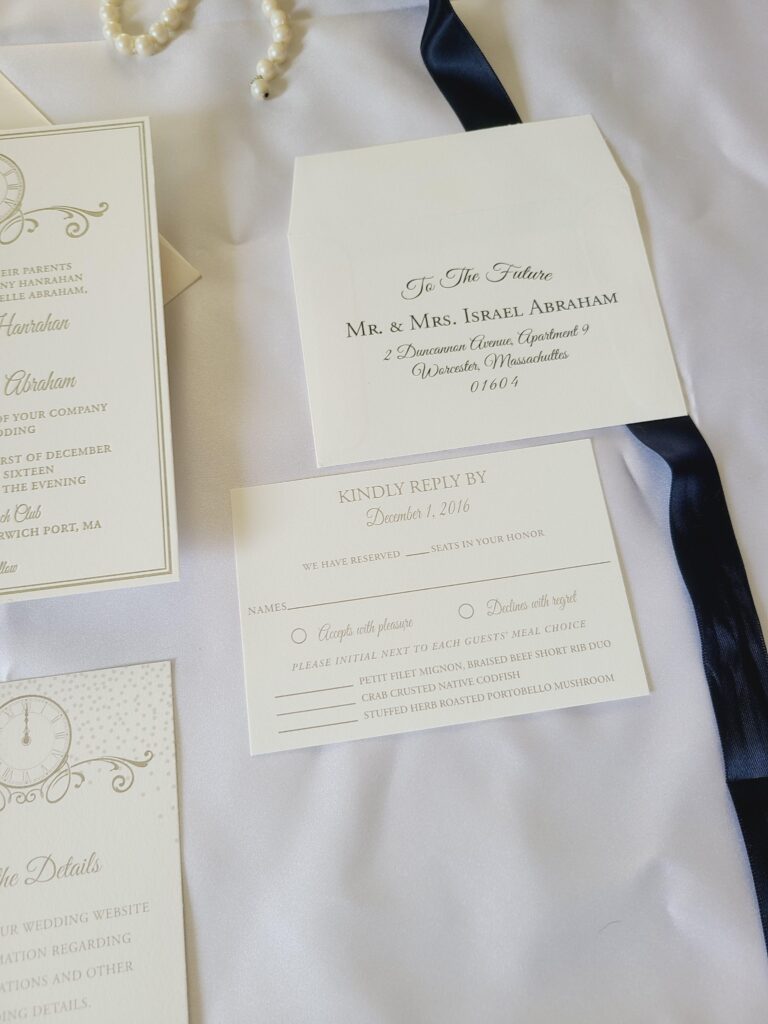
1. A Space for Guest Names
This is one of the most commonly overlooked details.
Without a clear place for guests to write their names, you may receive response cards with no way to identify who sent them.
Example:
“M__________________________”
This allows guests to fill in their name(s) clearly.
2. Acceptance Line
Your RSVP should clearly indicate whether guests are attending.
Traditional wording:
- Accepts with pleasure
- Declines with regret
This keeps things formal and timeless.
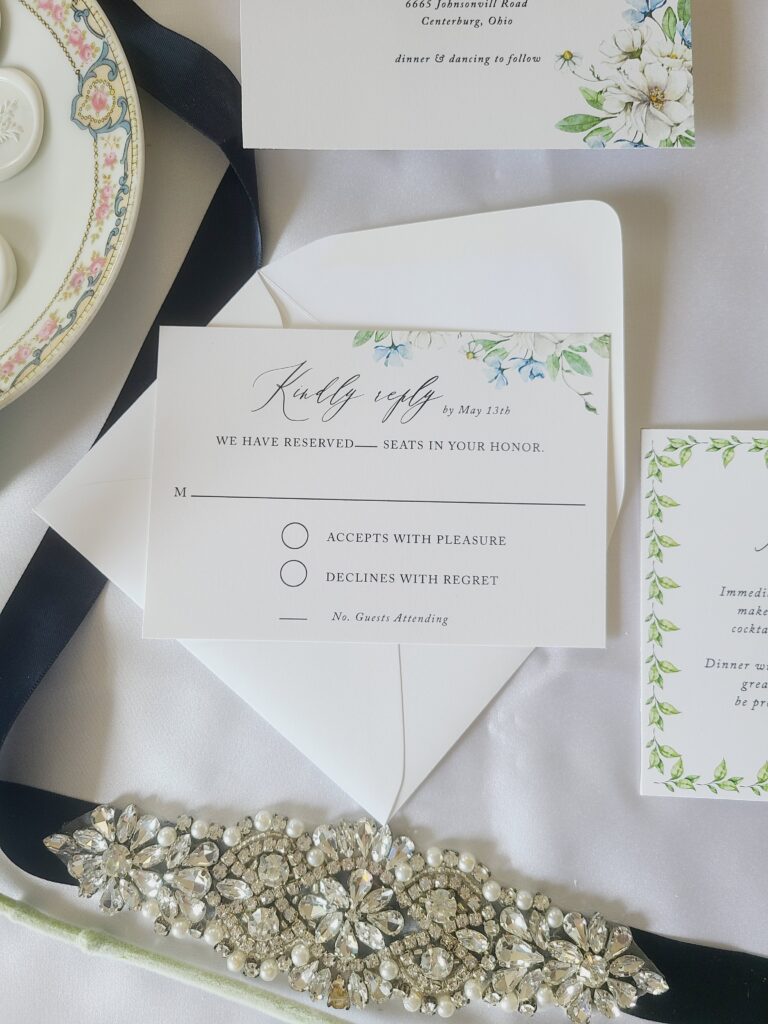
3. Guest Count (If Needed)
If you’re allowing a plus-one or multiple guests, this can be helpful.
Example:
“___ Number Attending”
This ensures you have an accurate final count.
4. Meal Selection (If Applicable)
If you’re offering meal choices, your RSVP card should clearly guide guests.
Example:
- Chicken
- Beef
- Vegetarian
It’s important that guests understand how to indicate their selection — whether by initialing, checking a box, or writing a number.
Common RSVP Wording Mistakes to Avoid
Even small details can make a big difference.
Not Including a Name Line
This is one of the biggest mistakes couples make.
Without it, you may end up guessing who responded — which can quickly become frustrating.
Unclear Instructions
If guests aren’t sure how to respond, they may:
- Skip sections
- Fill it out incorrectly
- Leave information blank
Clarity is always more important than creativity here.
Overcomplicating the Card
While it’s tempting to add personality, too many instructions or design elements can overwhelm the purpose of the card.
The goal is simple:
Make it easy for guests to respond correctly.
Balancing Personality and Practicality
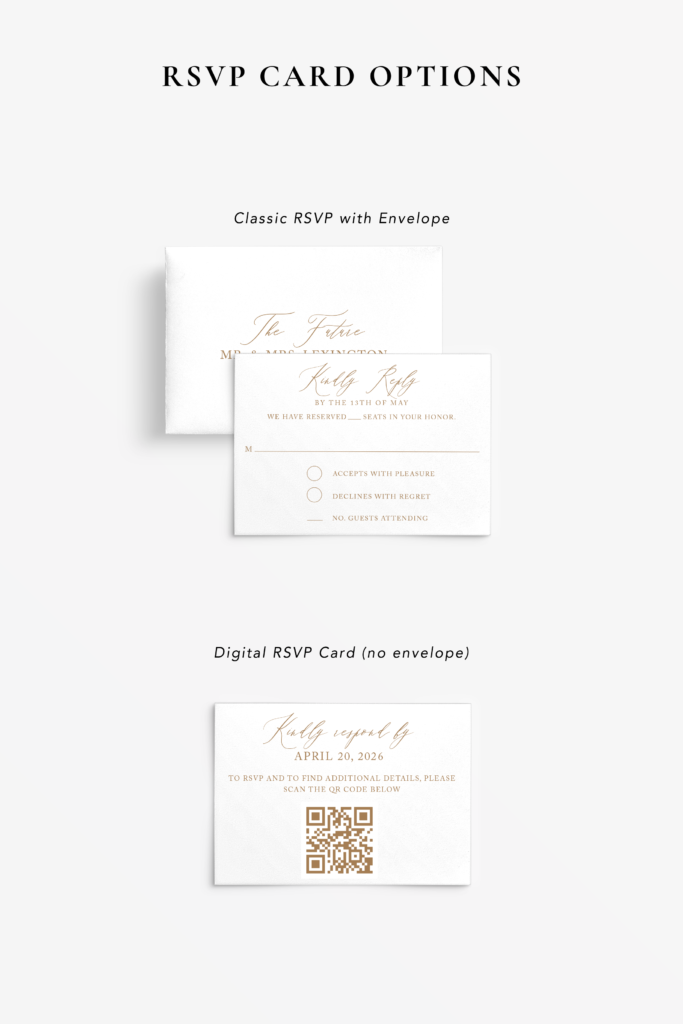
Your RSVP card is a place where you can add a subtle touch of personality — but it should never come at the expense of clarity.
You might choose to:
- Add a short, lighthearted line
- Use slightly more modern phrasing
- Include a small design detail
As long as the core information remains clear and easy to follow, these touches can enhance your suite beautifully.
How RSVP Cards Fit Into a Cohesive Suite
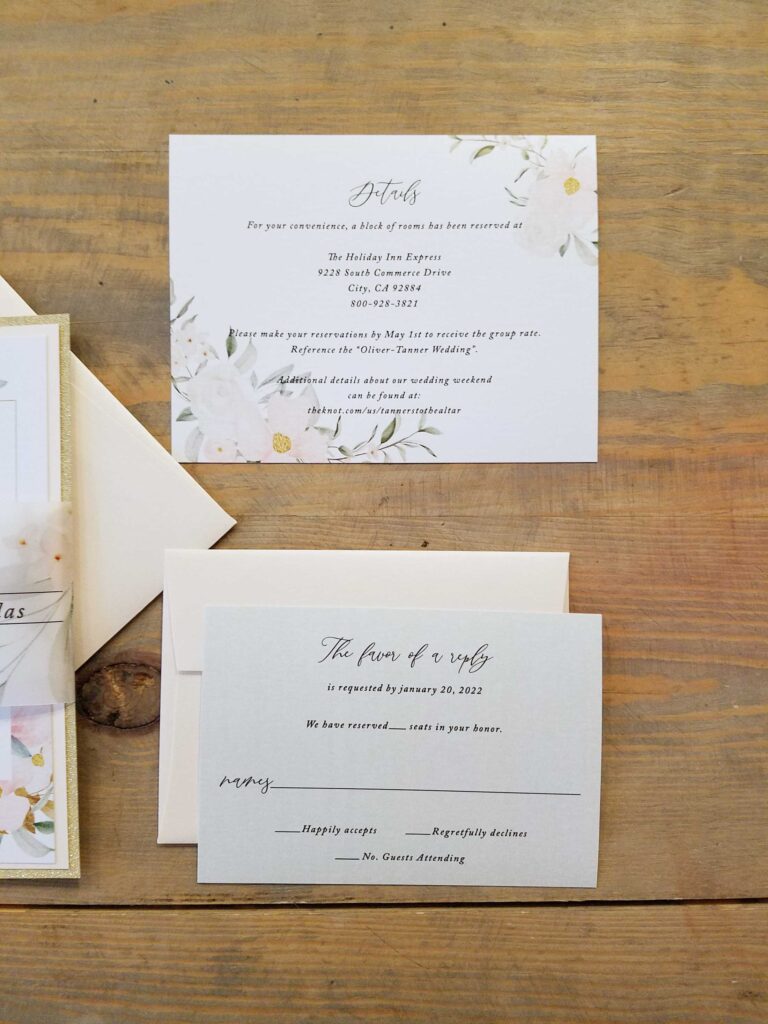
Your RSVP card isn’t just functional — it’s part of your overall design.
When it coordinates with your invitation suite:
- The typography feels consistent
- The layout feels balanced
- The entire experience feels polished
This is where a thoughtfully designed collection makes a difference — every piece, from the invitation to the RSVP card, is created to work together seamlessly.
Final Thoughts
Your RSVP card may be small, but it plays a big role in your wedding planning experience.
Clear, thoughtful wording helps ensure:
- Accurate responses
- Less follow-up
- A smoother planning process
And when it’s beautifully designed as part of a cohesive suite, it becomes both practical and meaningful — a small detail that supports your entire celebration.

Leave a Reply